Saturday, 16 March 2013

Week 2: Task 2 - My Learning Style

From conducting the learning styles questionaire, I received the following scores:

Activist: 8
Reflector: 13
Theorist: 14
Pragmatist:7

Overall I am a theorist/reflector in learning style.

According to the learning styles summary provided by Janeane Dart, a theorist likes to perform tasks which are backed up by a logical theory or a purpose. Theorists likes to perform which are backed up by a logical theory or a purpose. Theorists work well with basic assumptions, principles, theories, models and systems thinking. This resonates with me as I like to understand the theories behind everything I learn as well as the logistics behind every task. I think in a way, my theorist style of learning has lead me to exceed in high school subjects such as mathematics and sciences. 


Understanding the theories behind why certain equations work in both maths and chemistry have made remembering and applying equations very easy and logical for me. A theorists' learning style also resonates with my passion for leadership. I have always loved understanding the behind the scene logistics when it came to organising school or university events. 

I am also equally a reflective learner. The reflector is known to observe and analyse the information they gather before they come to any conclusion. They tend to shy from the limelight during discussions in order to take in the different opinions and ponder their answer. This proves true to my approach to learning as I do like to contribute to group discussions, although I am never the first one to give an opinion. I would much rather someone state their opinion first so that I can either add to it or disagree with it. 


The two learning styles in which I do not resonate with as much are pragmatists and activists. I think a way to improve my overall learning as an activist and pragmatist is to embrace opportunities and problems that arise and make more of an impact in group work and discussions. 

Sunday, 10 March 2013

Week 1: Task 4 - Timeline

5 Significant Events That Have Influenced Australia's Food Supply


1830's: Settlers introduced sheep and cattle which consequently lead to the establishment of large pastoral estates in Australia. Horticulture became a major part of a settler's life. 

1851: The gold rush brought many Chinese settlers to Victoria. The Chinese soon became the first market gardeners to supply the colony with fresh fruit and vegetables, which was a major influence our plentiful fruit and vegetable supply today.


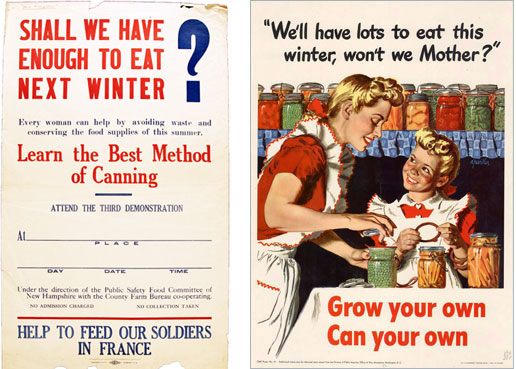
1918: SPC established their first fruit cannery in the Goulburn Valley. Canned foods were being shipped to British colonies in Australia from Britain and the establishment of canneries in Australia was a major influence on the Australian food supply. During the World War II, canning foods popularized and cans of cauliflower, brussel sprouts and tomatoes were sent to troops. 


1960's: Convenience foods such as frozen vegetables started to increase in popularity as more and more women were in the workforce. This altered the traditional "meat and veg" dinner Australian families were consuming. The increase in working women also influenced Australians to eat out more often. 

1991: The National Food Authority allowed for the cooperation between governments, industry and the community to standardise the Australian food supply and to encourage the freedom of goods and services around the nation. 


Week 1: Task 3 - My Cultural Identity

My ethnicity is Chinese Vietnamese, but not half Chinese and half Vietnamese. There was a small area of Vietnam where thousands of Chinese people lived that called themselves the Chinese Vietnamese or the Hoa people, that is where both my Grandparents and parents lived. My parents and grandparents migrated to Australia when they were in their teens. 


Being from a Chinese Vietnamese background means I get the privilege of indulging in both the Chinese (particularly Cantonese) and Vietnamese Cuisine. Mostly every dinner consists of rice and some sort of meat and Chinese vegetables. It also means I grew up eating delicacies from both countries often overlooked or avoided by other cultures such as preserved egg and ox tongue (my favourites).