Tuesday, 28 May 2013

Week 10: Task 1 - Professional Interview


I worked with Simon Au Yeung and we were allocated to interview Associate professor Karen Walker. We conducted this interview over email since Professor Walker was overseas on study leave and it was easier for her to answer the questions in written form. Nonetheless, we were able to see her personality shine through her emails as she wrote with such a story-like tone. It was very humbling to read.


I discovered that a career in dietetics does not necessarily mean you are working 9-5 in a clinic. I’ve realised that there is so much variety to this career which I definitely did not think there was before I started watching all the other presentations. In particular, Professor Walker was not only teaching, but she was able to publish journals, mentor graduates and participate in research all at the same time. The fact that she was able to practice and study nutrition overseas as well was extremely inviting to both Simon and I as travelling the world was an aspiration we both had. 


It was inspiring to hear how she had gotten into dietetics as this was not the path she had originally taken to begin with, but it made us realise that so many opportunities arise throughout your life and that it’s never too late to undertake something that you are passionate about. It also highlighted that I probably would not undertake teaching in the future as her descriptions of her average day in Notting Hill was not too exciting. On the other hand, she inspired me to consider public health or research in my future career. I feel now that I’ve listened to all of the presentations, I realised that even if I do decide to pursue a career in clinical dietetics, I can always do multiple things at once.

I would’ve loved to have met the Professor although I understand that the circumstances were too difficult to do so, she was nonetheless inspiring. Next time I would like to ask her more about her publications. Especially since she did so much work in Type 2 diabetes which I think will definitely be something I will come across as a dietician in the future. 

Saturday, 11 May 2013

Week 9: Task 1 - Social Justice


  "Equity in health is not about eliminating all health differences so that everyone has the same level of health, but rather to reduce or eliminate those which result from factors which are considered to be both avoidable and unfair. Equity is therefore concerned with creating equal opportunities for health and with bringing health differentials down to the lowest levels possible."
  Source: NSW Health, Four steps towards equity, 2003.

I think it is unrealistic to think that in the future we will be able to “elimin(ate) all health differences so that everyone has the same level of health” since there will always be discrepancies between us all due to the way we were brought up and our differing lifestyles. We are bound to inherit or develop illness due to the way we live our lives. Therefore I agree with this statement that equity is not about making our health status’ equal, rather reducing the factors that cause the divide between the sick and the healthy. Equity is not about equal health but equal opportunity for good health. This includes access to healthy foods, fresh water, shelter, education and healthcare.


The social, economic, geographic, political and physical determinants of health can influence ones equity. The social determinants are defined by the World Health Organisation (WHO) as the conditions in which people are born, grow, live, work and age. These are major determinants which can be a precursor to a good or poor health in the future. Economic determinants refer to the state of the economy you’re living in. For example, a country in recession will consequently affect the health of its residents. A geographic determinant that could hinder your ability to access fresh food or health care facilities is if you live in rural areas. 


Unhealthy politics can lead to inequities in health such as the civil war in Palastine where pregnant women were refused entry into the hospitals and were forced to give birth at checkpoints. Physical determinants can relate to having transport nearby in order to access food or having a well-lit, aesthetically pleasing park for kids to play in.  

All of these determinants play a major role in creating equity within the health of our society. It is important to address all of them since so many of them are linked and if one is lacking, it has a domino-effect on the rest. 

Sunday, 28 April 2013

Week 8: Task 2 - Personal Professionalism Experience


When I was first hired at Rodeo Show Boutique, they were not aware of my age when they took me on board. On my first shift the manager was really nice to me and happily taught me all the procedures that I needed to know to open, close and run the store. I had been rostered on to work about 26 hours per week because they thought I understood the new procedures really quickly. 


About a couple of weeks later it was revealed that I was only 18 years old and straight out of high school, and from then on I felt like I was treated with less respect by the management team. They had drastically reduced my hours to 6 per week with no reasoning behind it. Over the next month they had reduced my hours to 2 per week. 

Another casual member had noticed that they had cut down on my shifts drastically and she told me that it was really unfair of them to have me travel to the city for only a short shift. She herself was struggling with the 30 hours a week she was getting and she did not understand why some of those hours couldn’t go to me. As a result she sent an email to the head office asking if her hours could be reduced so that I could get a few more hours per week. A few days after she had sent the email I got a phone call from the management team saying that my employment was to be terminated as they simply did need any more workers since the hectic Christmas period was over and business was quieting down. A week after this I saw a casual sales assistant job being advertised on their shop front.  

I think a more professional way of terminating my employment was to just tell me that I was not age appropriate for the brand. During the group interview they should have asked everyone their age so that they would not have to rehire older sales assistants. Age is merely a number and I think they should have taken in my level of maturity and perhaps not have fired me at all as during my training they had said I was a very competent worker. 

Saturday, 27 April 2013

Week 8: Task 1 - Professionalism


Personal hygiene and uniform is a particular area that interests me in professionalism. At first I thought uniforms were just a form of identification, but after thinking about my own personal experiences in the health sector, they play an important part in one's professionalism. If I'm looking for a nurse in the hospital, I'm not going to approach someone who is dressed in tracksuits and ugg boots who is talking to the patient, I'm more likely to assume they are a visitor. I would approach the lady who is wearing her navy blue collared short and white tailored pants holding a clipboard. But it seems that there is more to uniforms than just identification purposes. 

 The 2010 report called “the impact of pediatric nurses’ uniforms on perceptions of nurse professionalism”, highlights how something as simple as first impressions on uniform can affect our perception on their level of professionalism. This report talks about a survey that was conducted on pediatric patients (children aged 7-17) and their visitors on the competency, approachability, attentiveness, professionalism and reliability of nurses dressed in different uniforms.   


A second study in 2006 run by Skorupski and Rea found that a white uniform highlighted that a nurse had the confidence, reliability  competence, professionalism and efficacy traits and nurses in a small-print uniform conveyed caring, attractiveness, cooperation, empathy and was approachable. Parents preferred a nurse in a small-print uniform to be the caregiver to their children. 

This is just proof that a healthcare worker will be judged on their professionalism and efficacy through how they present themselves. This cements the reason as to why hospitals and other health care facilities have dress codes in which the workers adhere to in order to maintain a level of professionalism across the workers. 


Sunday, 14 April 2013

Week 6: Task 2 - Health and Wellbeing


I interviewed my friend Claire over the phone who was diagnosed with anorexia nervosa around 6 months ago. She has recovered really well since her lowest weight at 41kg for a girl of 173cm in height. 


Claire and I have been good friends since year 7 and it was halfway through year 12 when I noticed she was losing a lot of weight and towards the pointy end of our HSC was when she was diagnosed. I asked if she could describe what a day in her life was like just before she was diagnosed, she said:

"Well, the first thing I did when I woke up (as sad as it sounds) was I felt for my hipbones to see if they were there. After this I instantly thought about what I'm having for breakfast, and everyday for 4 months it was 1/3 of a cup of rolled oats and 2 egg whites which was a total of 150 calories. My calorie goal for everyday was to consume less than 600 calories a day. After I finished my breakfast I would go to school, but on my mind constantly would be what I would be having for lunch. I always skipped recess and drank excessive amounts of water which caused my sodium levels to fall to dangerously low levels."

If I were to pretend I was a practising dietitian helping Claire in her recovery, I would advise that Claire slowly increase her calorie intake to a healthy level in order to aid gradual weight gain. As a SMART goal I would ask Claire to eat 1000 calories per day during Week 1, 1400 calories per day during Week 2, 1800 calories per day during Week 3 and 2200 calories in week 4. 


This is a measurable and realistic goal as I don’t want to frighten her with a high calorific consumption too early since she was so used to consuming 600 per day. After a month I would consider her progress and adjust to a higher calorific intake if more weight was still needed to be gained. 


Saturday, 13 April 2013

Week 6: Task 1 - Emotional Intelligence


I think one domain that I believe I need strengthening in is motivation. I have been finding myself slacking off in terms of keeping on top of lecture notes and in the case of science lectures, even my attendance (not to say that I don't go to any, I do skip one here and there though).  


I think a lot of my thoughts are directed at my social life and fitting in at my workplace at the moment. I have been thrusted into so many new environments and have been meeting so many new people in the last few months in Melbourne that I've completely lost track of the reason I moved here in the first place. I think another reason that I'm falling behind is that I'm not learning things that I'm particularly interested in. I've been longing for the lecture that I learn about all the fad diets and the use of macro and micro nutrients etc. The lectures that we are currently learning I understand are vital in my future career but I feel it isn't grabbing my attention very much. 

An effective way to increase my motivation levels is to reinspire myself through reading more about what I love – nutrition. I think I need a reminder to kickstart my passion for this course again and taking time outs from studying to just do some casual reading that is not required for the course will ignite my passion for this course again. 


I think a shift in my priorities is a little overdue, I need to remember that my friends will still be there after my presentations are over, but my presentations can’t be paused so that I can cruise in my social life. I think a good chat to my mum and dad will help me remember why I’m here as well. 


Saturday, 6 April 2013

Week 5: Task 1 - History of Nutrition


Recently at work, many of the girls had been talking about this new sugar free lifestyle they have taken on. They had all read this book called "I Quit Sugar" by Sarah Wilson which inspired them to take on this sugar-free lifestyle, relying on proteins, fats and low sugar carbohydrates to make up their diet. 


This first struck me as somewhat an extreme twist on the Mediterranian diet or the Atkins diet. They were eating lots of nuts and lentils but had little fruit in their diet. They reported the results to me saying that they felt much less bloated and was experiencing more stable moods. This seemed quite extreme to me to be eliminating fruit from their diet since fruit had always been advertised as "healthy" and were the source of many vitamins and minerals. 


I took to science to figure out the physiological effects of a low sugar diet. After three days of rummaging through the endless articles available online, I was unable to find any science-based information on the effects of quitting sugar. I also started to think about what Sarah Wilson meant by the terms "quite sugar", since she did not advise to quit lactose, maltose or glucose rather quitting fructose and refined carbohydrates. It was difficult to interpret exactly what was and wasn't allowed in the diet since she did not give much away on her website, insisting that I buy the book in order to find out more.


In a study where a group of rats were fed high-fructose corn syrup and the other fed with sucrose-supplements, it was shown that the rats that had been fed fructose had a higher level of fat deposits and higher levels of triglycerides in the blood. This may indicate that fructose in comparison to sucrose may increase the likelihood of lipogenesis. Although, there are no further studies which back up this statement and it is not certain that the physiology of a rat is the same of that of a human.

In conclusion, I believe that this "I quit sugar" craze is not scientifically based and seems to show effects similar to those that are on a healthy diet already. 


Saturday, 30 March 2013

Week 4: Task 2 - Group Feedback For Oral Presentations


Positive Feedback

I was amazed at the passion and enthusiasm all groups had towards their choice of cuisine and in recounting their restaurant/cooking experience. It was inspiring to see such passion come from a group presentation. Groups gave a really detailed explanation of the makeup of their chosen cuisine and their speaking skills were natural. Groups seemed to really bond over this experience which is a comforting thought.


Supportive Feedback

Not all groups were able to elaborate on their cuisines influence in Australia. This was particularly hard for groups that were presenting on cuisines that are not very popular in Australia or if the cultural population in Australia is small. Some groups had not timed their presentations and hence went over time and were not able to present all the information that they had prepared. A lot of groups relied heavily on a written our speech on paper which made their group seem somewhat unprepared. A contents slide at the start and summary slide at the end was very effective for the few groups that had included them in the presentation, although these were missing from majority of the groups which made the presentations feel unstructured. 


Week 4: Task 1 - Personal Feedback


Recall a personal experience of feedback (this may have been a particularly positive or confronting / upsetting experience)  and using your preferred model of reflection, reflect on this experience of feedback with a particular focus on how this has impacted upon / influenced you (limit 300 words)

Using reflective cycle - Gibbs
1. Description - what happened?

After receiving my results for my trial HSC, each student had an individual feedback session with our English teacher. I had received an 18/25 for my critical analysis piece. 

"Well done, Charmaine. You did really well in this one." said Ms Schlam encouragingly.

"Really?" I questioned. "I got a low B, that's hardly enough for a band 6 in English."

"Charmaine, love. Let's be realistic about your goals. I think at the best of your potential, you're a high band 5 student. So let's aim for a high band 5."

The Experience:

It was a relaxing Sunday afternoon at work (Sportsgirl Bourke St). I was told by my manager to let every few customers know that there was a further 30% off sale items to drive up sales a little. And to her request I did. 

"Just letting you know that there's a further 30% off the sale price on that one!" I would say to the customer rummaging through the sale racks. 

"Thanks" was the usual reply I would get, usually in a dismissive tone, but fair enough. I never enjoyed being hassled whilst shopping anyway. 

I had become used to this response and so was extremely surprised to hear this response from a customer after I had told her about the promotion. 

"Well, it would be nice if you actually stocked my size!" she replied aggressively. 

"Oh, well what size were you after?"

"Either a 14 or a 16; but it seems that no stores stock these sizes anymore and frankly it disgusts me. It's as if you don't want us bigger ladies to wear your clothing because you're too 'cool' for us now."

"That's really not the case mam. It's just with the sale stock, we aren't able to restock it with the sizes that have sold out if we have no more in our stock room. It's just unfortunate that with some particular styles, the larger sizes sell out faster."

"Look, Sportsgirl needs to get with times. Australia is getting bigger and you guys need to stop discriminating and start selling the appropriate sizes."

"Well, are there any styles that you are particularly fond? I could check our stock room for you for the sizes you were after."

"No, look I'm done with this brand. It's just disgusting that you think fat people don't look good in your clothes. I've had it." 

The customer stormed out of the store angrily and I was left speechless at how quickly that situation escalated. 

Reflective Cycle - Gibbs

1. Description - what happened?

Read "The Experience" 

2. Feelings - what were you thinking and feeling?

At first I was quite shocked. Her initial reply really caught me off guard as I was so used to hearing a generic reply. This I think caused me to utter out words that didn't sound as understanding as I should have replied. I think also because I am so passionate about eating healthily and sharing that knowledge to help the people around me, I was quite offended when she had said that Australia was getting bigger and so the company had to adjust according to the size of the customer. As she was saying that, in my head I was thinking "well, shouldn't you be trying to get yourself into a healthy weight range instead of everyone else adjusting because of your bad food choices." That sentence I think really got to me because I don't ever want to see the day we start selling sizes 18 and 20 in mainstream stores because that would cement to me that being overweight is becoming the norm. 

3. Evaluation - what was good and bad about the experience?

It was good that I got to experience an extreme customer because I was able to debrief with my manager and she taught me ways to deal with such situations. In a way it was also somewhat of a case study so that my coworkers would also know what to say in the situation. It also showed me the perspective of an overweight person trying to find trendy clothes. It would be even harder to fit in if they were only restricted to certain brands due to their size. This could contribute to a plummeting self-esteem which in turn can cause them to overeat even more. 

I know that I do not handle confrontation very well, so naturally I was quite cautious with the customers for the rest of the day. The customer did not get a good customer experience in the store, which I understand isn't entirely my fault, but I had the opportunity to make it better and I didn't. 

4. Analysis - what sense can you make from the experience?

If I put myself in the customers shoes, I would've felt the same amount of anger if I could never find anything that was in my size. If I were to be told I could only wear a certain type of clothing because of my size I would be severely offended so I do understand where she is coming from upon reflection. 

5. Conclusion - what else could you have done?

It the time I was not as understanding as I should have been. I was too busy thinking that the store should not be promoting an unhealthy weight by stocking large sizes. I have now realised that this is a very unrealistic and skewed view. I should have told her that this was good constructive criticism that I could pass onto the head office for her, as at the end of the day, if our target market is getting larger, so should our sizes. 

6. Action Plan - if it arose again, what would you do?

If the situation arose again I would definitely use more understanding words. I would also try the best I could to find styles that she liked that were available in her size. After reflecting on this experience I've realised I need to put myself in other people's shoes before I make a judgement. 


Sunday, 24 March 2013

Week 3: Task 3 - Reflection Models

The Experience:

It was a relaxing Sunday afternoon at work (Sportsgirl). I was told by my manager to let every few customers know that there was a further 30% off sale items to drive up sales a little. And to her request I did. 


"Just letting you know that there's a further 30% off the sale price on that one!" I would say to the customer rummaging through the sale racks. 

"Thanks" was the usual reply I would get, usually in a dismissive tone, but fair enough. I never enjoyed being hassled whilst shopping anyway. 

I had become used to this response and so was extremely surprised to hear this response from a customer after I had told her about the promotion. 

"Well, it would be nice if you actually stocked my size!" she replied aggressively. 

"Oh, well what size were you after?"

"Either a 14 or a 16; but it seems that no stores stock these sizes anymore and frankly it disgusts me. It's as if you don't want us bigger ladies to wear your clothing because you're too 'cool' for us now."

"That's really not the case mam. It's just with the sale stock, we aren't able to restock it with the sizes that have sold out if we have no more in our stock room. It's just unfortunate that with some particular styles, the larger sizes sell out faster."

"Look, Sportsgirl needs to get with times. Australia is getting bigger and you guys need to stop discriminating and start selling the appropriate sizes."

"Well, are there any styles that you are particularly fond? I could check our stock room for you for the sizes you were after."

"No, look I'm done with this brand. It's just disgusting that you think fat people don't look good in your clothes. I've had it." 


The customer stormed out of the store angrily and I was left speechless at how quickly that situation escalated. 

Reflective Cycle - Gibbs


1. Description - what happened?

Read "The Experience" 

2. Feelings - what were you thinking and feeling?

At first I was quite shocked. Her initial reply really caught me off guard as I was so used to hearing a generic reply. This I think caused me to utter out words that didn't sound as understanding as I should have replied. I think also because I am so passionate about eating healthily and sharing that knowledge to help the people around me, I was quite offended when she had said that Australia was getting bigger and so the company had to adjust according to the size of the customer. As she was saying that, in my head I was thinking "well, shouldn't you be trying to get yourself into a healthy weight range instead of everyone else adjusting because of your bad food choices." That sentence I think really got to me because I don't ever want to see the day we start selling sizes 18 and 20 in mainstream stores because that would cement to me that being overweight is becoming the norm. 

3. Evaluation - what was good and bad about the experience?

It was good that I got to experience an extreme customer because I was able to debrief with my manager and she taught me ways to deal with such situations. In a way it was also somewhat of a case study so that my coworkers would also know what to say in the situation. It also showed me the perspective of an overweight person trying to find trendy clothes. It would be even harder to fit in if they were only restricted to certain brands due to their size. This could contribute to a plummeting self-esteem which in turn can cause them to overeat even more. 

I know that I do not handle confrontation very well, so naturally I was quite cautious with the customers for the rest of the day. The customer did not get a good customer experience in the store, which I understand isn't entirely my fault, but I had the opportunity to make it better and I didn't. 

4. Analysis - what sense can you make from the experience?

If I put myself in the customers shoes, I would've felt the same amount of anger if I could never find anything that was in my size. If I were to be told I could only wear a certain type of clothing because of my size I would be severely offended so I do understand where she is coming from upon reflection. 

5. Conclusion - what else could you have done?

It the time I was not as understanding as I should have been. I was too busy thinking that the store should not be promoting an unhealthy weight by stocking large sizes. I have now realised that this is a very unrealistic and skewed view. I should have told her that this was good constructive criticism that I could pass onto the head office for her, as at the end of the day, if our target market is getting larger, so should our sizes. 

6. Action Plan - if it arose again, what would you do?

If the situation arose again I would definitely use more understanding words. I would also try the best I could to find styles that she liked that were available in her size. After reflecting on this experience I've realised I need to put myself in other people's shoes before I make a judgement. 

Atkins and Murphy (1984)


1. Describe the situation including feelings and thoughts. 

Read "The Experience"

2. Analyse feelings and knowledge relevant to the situation. 

At first I was extremely shocked by her reply as I was not expecting such a forceful response. I was also really offended that she was so definite on her statement saying that Australia was getting bigger since this is something I am passionate about changing. I think in effect, this was why my reaction to her was less understanding than it should have been.  

3. Evaluate the knowledge

I now understand that my reactions were really insensitive to how the customer must have felt. Yes, being overweight is not ideal, but not being able to find clothes that fit you is not okay. I am so blessed to have the freedom to wear what I like and I can not imagine how it would feel to be restricted to only certain types of clothing just because of my body shape. So this was definitely an enriching experience as I now know to put myself into other people's shoes in a confrontation.

4. Identify any learning

I have now learnt to be more understanding to customers who cannot find their sizes. If this were to repeat throughout every store I go to, I too would be extremely angry and I would therefore blame it on the higher demand for this size. So I completely understand why she would bring it to my attention that stores are always running out of larger sizes very quickly.

5. Awareness of uncomfortable feelings and or thoughts. 

I am aware that I need to push my thoughts and opinions aside when dealing with customers and to be more compassionate. I will never know where the customer has come from or what the customer has been through, so to not be judgemental from now on is something I will do whilst working. 

The more effective model for me was the Gibbs. I felt like the steps in reflection allowed me to delve further into the reasons behind my actions. I felt I had a better understanding of the situation after my Gibbs reflection.

Week 3: Task 2 - Why We Eat What We Eat?


Last night I went to a friends house for dinner and every time I embark on this journey I am faced with a new culinary dish that I have never tried before. This time it was marinara. 

My friend's father, James asked me "Are you okay to have marinara tonight, Charmaine?"

"Sorry, what was that?" I asked as I did not know what it was. 

"Marinara" he replied cheerfully then turned around to mix the sauce through again. He had assumed I knew exactly what it was and that I had just misheard him.

"Haha! I'm not too sure what marinara actually is, James."

"Oh, it's like a seafood tomato sauce! Lots of calamari, tender fish and mussels in it! And we pour that on top of pasta!"


After the pasta was put on plates and the table was set. James brought out a glass bowl with what looked like a block of tofu soaking in water. 

" Have you ever eaten feta before, Charmaine?" asked James, now being more cautious with what he was asking me. 

"Yeah I have, but only in spinach and feta pies or a little on top of pasta." I replied

James cackled. "Ha! Well you're in for a treat! In the Asvestas household, we eat whole chunks of it. It's a very strong flavour so you might want to just try a small chunk before you really dig into it."

I remember my first impressions of the pasta was delicious. In fact, I think I had actually had it before in an Italian restaurant but never really picked up that a seafood pasta was technically called marinara. The feta on the other hand, looked quite unappetising. Being from a Chinese background and for the cheese to look so similar to tofu, I thought maybe the texture would be quite similar. This was not the case though. It had a rubbery texture and the taste was so pungent and strong. It was definitely good advice for me to eat a small amount of it. I gawked in awe of the family eating the bite size pieces cheese as if they were crackers. 


After this experience I surprised myself at how little i knew outside of Asian cuisine. Being brought up Chinese, and having regular Chinese and Vietnamese meals had made my used to eating foods that had familiar flavours. Cheese is hardly used in these cuisines which I now understand played a part in me not having tried feta in such a way before.

Trying this new food has enlightened me in many ways. First and foremost, I now understand that there is a wide variety of foods outside what I usually eat and that there is so much for me to try. In order to be a great dietician I must familiarise myself with foods of all cuisines. Secondly, I realised not to make assumptions on how much people know about foods. James automatically assumed that I knew what marinara was, and to be on the recieving end of this assumption opened my eyes to how a person may feel if I assume that they know what foods I will be talking about as a dietician. 

Saturday, 23 March 2013

Week 3: Task 1 - GUSTO Exhibition and Melbourne Markets

My food tour group went to the Queen Victoria Markets where we explored the markets, in particular the deli area and variety of cuisines that were sold there.


The first thing that caught all of our eyes was the variety of cold meats and sausages that were sold there. I knew before hand that cold meats and sausages were a major part of German cuisine so I was not surprised to see that there were a number of German delis in the precinct.


What did surprise me though was seeing South African and Australian delis in the precinct. We were able to discover all sorts of sausages that we had never seen before which was definitely an enriching experience for us all. 


After completing our work sheet, my food tour group headed to China Town on Little Bourke St where we were able to compare all the different Asian cuisines that were sold in the area. What surprised us the most was seeing different types of cuisines selling the same dish, only with small variations in the ingredients. For example, Chinese and Malaysian restaurants were often seen with similar menus.


This was probably what resonated with me the most. China town had pretty much morphed into the modern day "Asia town", now selling all types of Asian cuisine rather than just Chinese. The Chinese were the first large Asian population to settle in Australia which explains why the precinct is called Chinatown. 


The reason for this concentration of multiple cuisines in one area is most likely due to the store holders wanting to open a store in an area that people recognise Chinese cuisine will be sold at. In twisting their menus to make them seem like a variant of Chinese meals, they are able to attract more customers. 

Sunday, 17 March 2013

Week 2: Task 1 - SMART Goal


My individual smart goal is to practice yoga every Wednesday and Saturday morning for 40 minutes. This directly links to the exercise and stress management pillars in the essence of health. After completing my lifestyle assessment, I realised that I had a lot of stress and negative energy in my life. I feel that in completing this smart goal, I'll be able to give myself a small amount of time to just relax and focus on my body and mind. In turn, I hope that i'll be able to manage the stress from moving to a new state and the pressure of having to make new friends and manage a small budget on living expenses. 


Saturday, 16 March 2013

Week 2: Task 2 - My Learning Style

From conducting the learning styles questionaire, I received the following scores:

Activist: 8
Reflector: 13
Theorist: 14
Pragmatist:7

Overall I am a theorist/reflector in learning style.

According to the learning styles summary provided by Janeane Dart, a theorist likes to perform tasks which are backed up by a logical theory or a purpose. Theorists likes to perform which are backed up by a logical theory or a purpose. Theorists work well with basic assumptions, principles, theories, models and systems thinking. This resonates with me as I like to understand the theories behind everything I learn as well as the logistics behind every task. I think in a way, my theorist style of learning has lead me to exceed in high school subjects such as mathematics and sciences. 


Understanding the theories behind why certain equations work in both maths and chemistry have made remembering and applying equations very easy and logical for me. A theorists' learning style also resonates with my passion for leadership. I have always loved understanding the behind the scene logistics when it came to organising school or university events. 

I am also equally a reflective learner. The reflector is known to observe and analyse the information they gather before they come to any conclusion. They tend to shy from the limelight during discussions in order to take in the different opinions and ponder their answer. This proves true to my approach to learning as I do like to contribute to group discussions, although I am never the first one to give an opinion. I would much rather someone state their opinion first so that I can either add to it or disagree with it. 


The two learning styles in which I do not resonate with as much are pragmatists and activists. I think a way to improve my overall learning as an activist and pragmatist is to embrace opportunities and problems that arise and make more of an impact in group work and discussions. 

Sunday, 10 March 2013

Week 1: Task 4 - Timeline

5 Significant Events That Have Influenced Australia's Food Supply


1830's: Settlers introduced sheep and cattle which consequently lead to the establishment of large pastoral estates in Australia. Horticulture became a major part of a settler's life. 

1851: The gold rush brought many Chinese settlers to Victoria. The Chinese soon became the first market gardeners to supply the colony with fresh fruit and vegetables, which was a major influence our plentiful fruit and vegetable supply today.


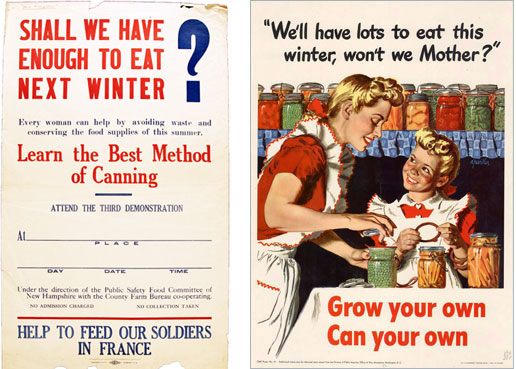
1918: SPC established their first fruit cannery in the Goulburn Valley. Canned foods were being shipped to British colonies in Australia from Britain and the establishment of canneries in Australia was a major influence on the Australian food supply. During the World War II, canning foods popularized and cans of cauliflower, brussel sprouts and tomatoes were sent to troops. 


1960's: Convenience foods such as frozen vegetables started to increase in popularity as more and more women were in the workforce. This altered the traditional "meat and veg" dinner Australian families were consuming. The increase in working women also influenced Australians to eat out more often. 

1991: The National Food Authority allowed for the cooperation between governments, industry and the community to standardise the Australian food supply and to encourage the freedom of goods and services around the nation.